
Apply for admission – we welcome applications from excellent candidates all over the world
We offer an outstanding and distinctive Erasmus Mundus Joint Master experience to our graduate students. The two year full-time integrated programme’s board is looking for students who demonstrate a high degree of commitment and motivation, a strong interest and background in the GEOSPATIAL field of applications as well as in working in international environments. They should fulfill all required academic qualifications for admission with excellent academic results and can document high level competences in English language.
The November to January application period is open to candidates worldwide, offering the opportunity to apply for Erasmus+ EMJM scholarships or to join the programme on a self-funded basis. The March to May application period is specifically for European candidates, who can apply on a non-scholarship basis on a rolling admission procedure. Rolling admission procedure means that we accept applications from March until the deadline or until all study places have been allocated.
Selected candidates may be nominated either for an Erasmus Mundus Scholarship or for a participation cost fee waiver. Candidates who are self-funded will be eligible only for a participation cost fee waiver. Detailed information regarding the total number of study places and their distribution across the different funding categories is provided in the official call document.
The call is open to applicants from all over the world, including those within and outside Europe. Make sure to read the call document carefully to learn more about the eligibility criteria and available study seats in each category.
CALL OPEN: November 10, 2025 – January 18, 2026 (23:59 CET)
The Application Handbook helps you prepare and complete your online application step by step. For further support, check the FAQ section, especially the ‘Online Application Form’ questions and answers, and join Our Virtual Information Sessions & Webinar!

Academic background
Applicants are expected to hold a degree in a geospatial or closely related discipline.
The programme welcomes students from diverse academic backgrounds, reflecting the interdisciplinary nature of Earth Observation and Geoinformatics.
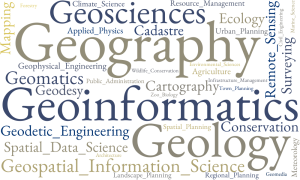
Typical fields of study include (but are not limited to):
Geography, Geoinformatics, Geology, Geosciences, Geospatial Information Science, Geomatics & Geodetic Engineering, (Spatial) Data Science, Cartography, Remote Sensing, Ecology & Conservation, Surveying & Mapping, Geodesy & Cadastre, Geophysical Engineering, Applied Physics, Agriculture, Resource Management, Meteorology & Climate Science, Urban and Regional Planning, Landscape and Spatial Planning, Public Administration, Infrastructure Management, Civil Engineering, Forestry & Environmental Sciences, Wildlife Conservation & Zoo Biology, Marine Science, Architecture & Town Planning, and Geomedia. (Note: The list above is illustrative rather than exhaustive, meaning candidates from related disciplines are encouraged to apply.)
>>LEARN more – ELIGIBILITY CRITERIA<<
YOUNG GRADUATES and CURRENT UNDERGRADUATE STUDENTS
The Master of Science programme is designed to help young graduates and early-career professionals strengthen their careers in Earth Observation (EO) and Geographic Information (GI).
Participants will gain hands-on scientific experience at top European universities, supported by work placements and blended learning opportunities.
Apply for admission, best-ranked students will win a fully funded Erasmus Mundus scholarship or will be nominated for a participation cost fee waiver.
latest update: November 10, 2025